Amazing wet season visit to Iron Range National Park

Grant Batterham | Guest Contributor

Editor’s note: General wildlife notes/pictures have been included in this article to promote the overall conservation value of this region. All photos are copyrighted by the author.
Cape York and in particular, Iron Range (Kutini-Payamu) National Park (NP), has long been a bucket-list destination for me to see and photograph the iconic birds, and other wildlife, that are found nowhere else in Australia. So let me take you on a nine-day journey with a very enthusiastic first-timer!
I first tried to visit the Cape in December 2023, but the trip was another casualty of Tropical Cyclone Jasper that affected so many in North Queensland. Mindful of the restrictions from heavy wet season rainfall, daily monitoring of both the weather (mostly pointless) and the eBird sightings preceded our mid-January 2026 trip. I was ready already!
Armed with over 10 kg of camera equipment, I was lucky my friend Alan Gillanders was travelling light and thus avoided excess baggage charges on the flight to Lockhart River! Time slowed down as we arrived and were met by Matt Wright (guide and friend), and our fellow wildlife photographer Samantha Wright. We checked into the Greenhoose, a great base immersed right in the rainforest with birds, insects and reptiles in abundance on our very doorstep: some later identified as being new to science!
After a late afternoon discussion on aspirations, we were straight into a night spotlighting trip and the “WOW” started with endemic Green Pythons and the rarely seen night roost of the iconic Papuan Pitta!


The next day we were further blessed by a “blue-bird” golden dawn and observing Palm Cockatoos feeding on the coastal Beach Almonds. Having encountered them from a distance in my regular work trips to Papua New Guinea (PNG), this was indeed very special and I could watch their comical behaviour for hours!


Over the next few days we were again very lucky, experiencing the calls of a dispersed family group of Marbled Frogmouths; a male Cassowary with two post-stripey chicks (uncommon in Iron Range); the very rarely seen Southern Common Cuscus; and my number one – the Papuan Pitta!

The sheer density of Pittas was remarkable, both Papuan and Noisy – a likely reflection of this unique ecosystem that has less ground mammals and an abundance of insects. The haunting “waaaop-aaaaawoo” call of the Papuan Pitta is the ever-present soundtrack of the Iron Range rainforest that will always linger with you.

Tantalising glimpses of the elusive Black-eared Catbird preceded an eye-level encounter of the secretive Trumpet Manucode, a bird of paradise with an amazing namesake call. The Manucode had likely been lured down by fruiting Solitaire Palms, and is normally only observed in the shadow of the mid to upper canopy.


For a change of scene we opted into a dawn boat-trip from Portland Roads to try and find a Mangrove Monitor, which is rare and wasn’t even on the species list!
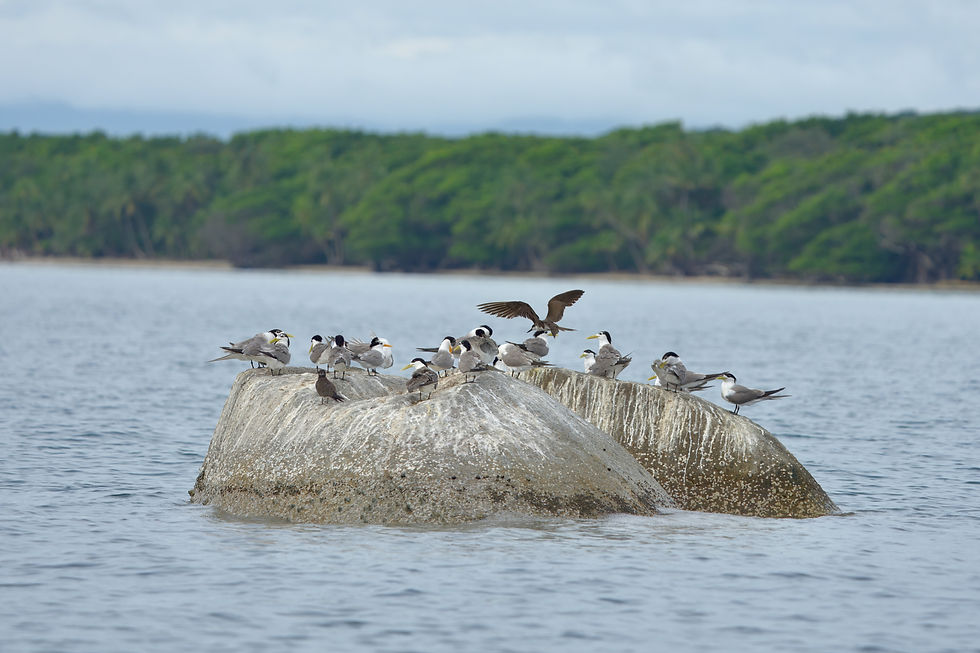
While we were cruising down past Chilli Beach, through aquamarine crystal clear waters and white sands, a 3 m saltwater crocodile swam directly under the boat, and we encountered many waterbirds resting on offshore rock outcrops, including Lesser/Greater/Bridled Terns and the Common Noddy.

After several hours of searching mangrove-lined creeks, we did finally find a Mangrove Monitor sunning itself on an exposed limb.


The Cooks Hut Camping Area was unoccupied during the wet season and was a regular “stop-over”. It was here that we had one of the trip’s absolute highlights with great daytime views of a Southern Spotted Cuscus mother feeding over consecutive days.


Other notable encounters included the endemic White-faced Robin and Magnificent Riflebird, a Cape York Rat, Tube-nosed Bat, Superb Fruit Dove, and the endemic Tawny-breasted and Graceful Honeyeaters that were feeding on the same fruit of a False Gardenia.


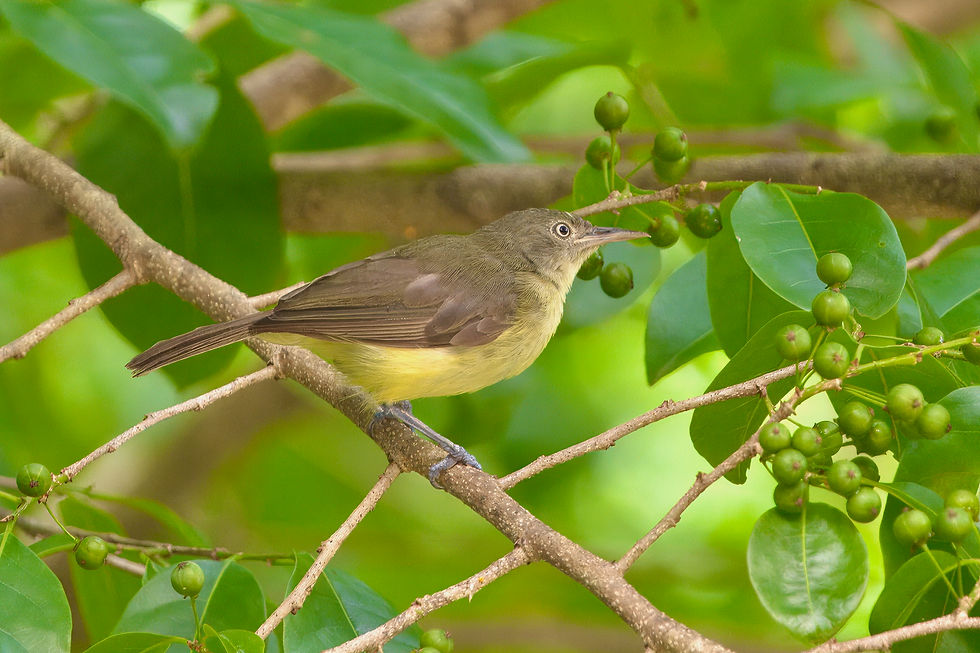
After getting used to the heat and only taking three showers a day, a highlight on day seven was a Green-backed Honeyeater, reportedly the most difficult endemic to photograph on the Cape due to its canopy and active behaviour.
This was then upstaged by a Papuan Eclectus Parrot, a species which was ever present, but extremely skittish compared to their Papua New Guinea cousins, and they are actively hunted. This female was remotely keeping guard on her precious nesting hollow, the subject of many historical Iron Range picture posts, but now obscured by new growth. We checked in several times and were then lucky to get some stealth pics through the window “car-hide”, and then from behind the vehicle.


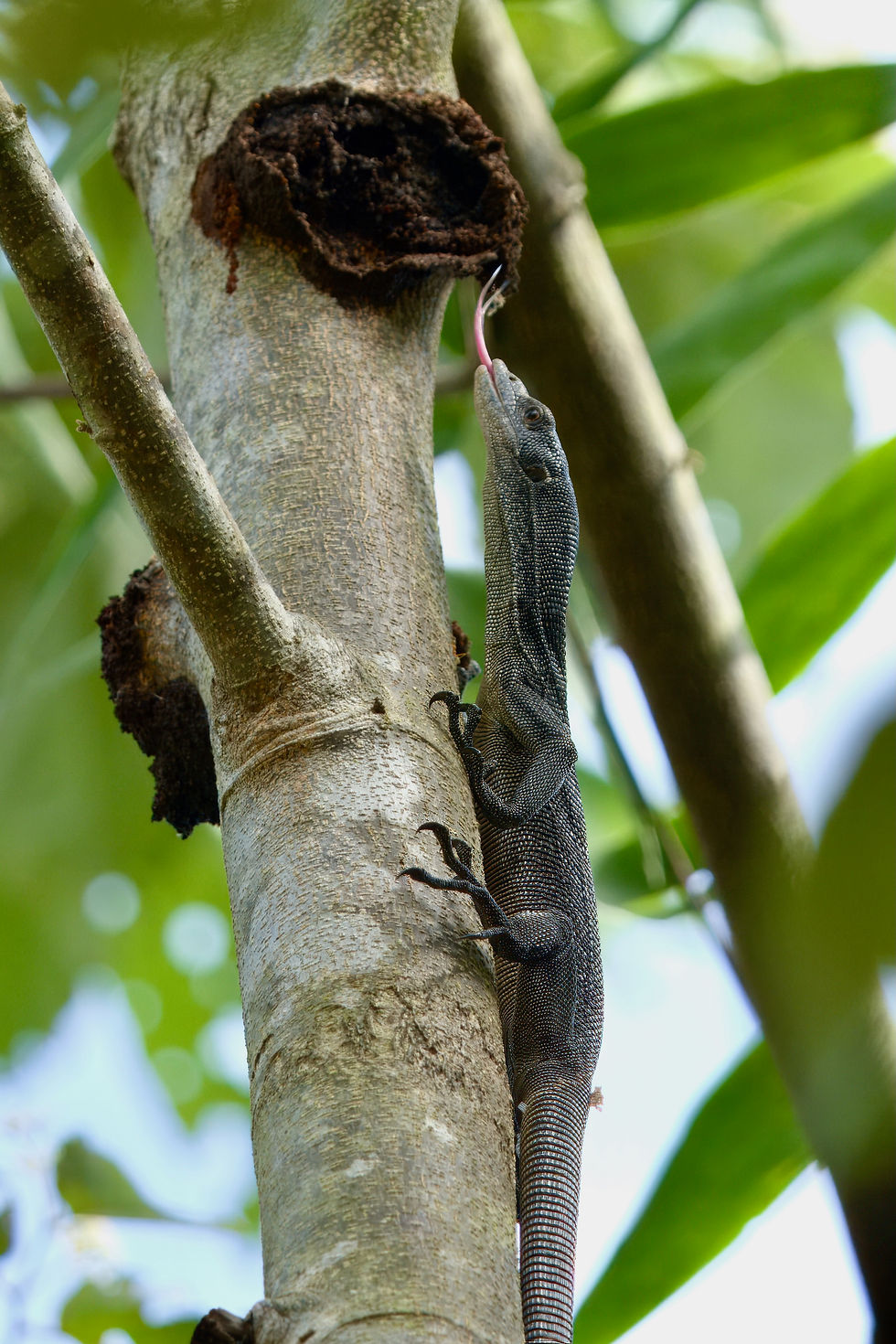
Our Eclectus Parrot photo session was closely followed by some exceptional views of a nearby Canopy Monitor.

After dreading wet weather, our first significant afternoon thunderstorm deluge was actually a blessing, and brought the whole rainforest to life with a chorus of reverberating frog calls that included both the endemic Graceful and Fringed Tree Frog.


The final few days were marked by a sighting by Doug Herrington of Yellow-billed Kingfisher (YBK), another Iron Range icon, and we re-visited Matt’s known arboreal termite nest mound at a respectful distance with our 600 mm lenses. After 40 minutes of patience, a trill from the YBK male announced a shift-change, and the female YBK emerged and then displayed in a nearby tree for over 20 minutes.


So that wraps up an amazing trip to this unique ecological island in Far North Queensland. No doubt, I will be back. I could share so much more and you are welcome to visit my public Facebook account.
A big thanks to the expertise and friendship of our team – Matt, Alan and Samantha – that led to so many fortunate discoveries and encounters. I would also like to also thank the welcoming Greenhoose staff, Captain Tilly, the Lockhart River youth “Hey Mister” crew, Doug, and Portland Roads Cafe for their wonderful engagement and hospitality!