

Cairns and the new National Directory of Important Migratory Shorebird Habitat

Sally Sheldon | BirdLife Australia Technical Support Officer (Birdata)
Why it matters for local birders and how you can use it
In March 2026, BirdLife Australia released the most comprehensive update yet to the National Directory of Important Migratory Shorebird Habitat – commonly known as “the Directory”. For birders in the Cairns region, the Directory confirms what many local wader watchers have long known: Cairns is one of Australia’s most important areas for migratory shorebirds.
What is the Directory?
The Directory is an Australian government-backed, nationwide assessment identifying the most important non-breeding habitats for migratory shorebirds across Australia. It draws on over 40 years of coordinated monitoring, including 15 years of intensive data (2009–2024) from the Australian Shorebird Monitoring Program (ASMP).
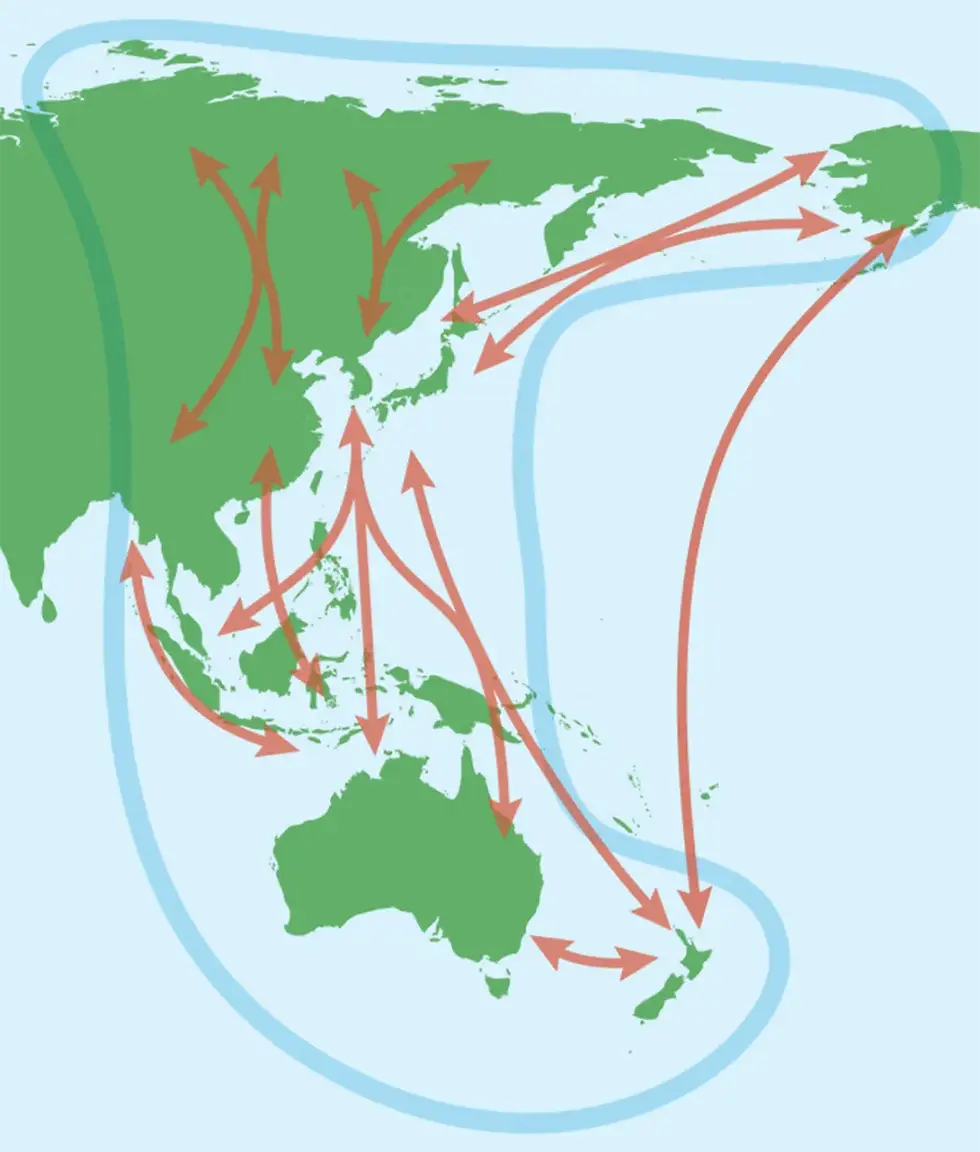
It identifies 332 nationally or internationally significant sites – places that are critical to the survival of migratory shorebirds that travel along the East Asian-Australasian Flyway. These birds undertake extraordinary journeys, migrating from breeding grounds in places like Siberia and Alaska to spend the non-breeding season in Australia. In total, 37 migratory shorebird species regularly visit Australia, all protected under national environmental law.
Why does it matter?
The Directory is much more than a list of sites – it’s a decision-making tool. It is used to guide conservation planning and habitat protection, inform environmental impact assessments under the national Environmental Protection and Biodiversity Conservation (EPBC) Act 1999, support Ramsar and Flyway Network site designations, and help prioritise areas for restoration or management. In short, it provides the scientific evidence needed to protect the places shorebirds depend on.
How are 'important' sites defined?
Sites in the Directory are assessed against clear, quantitative criteria. A site may be classified as:
'Internationally Important' if it supports:
At least 1% of a species’ total Flyway population, or
20,000 or more waterbirds
'Nationally Important' if it supports:
At least 0.1% of a species’ Flyway population, or
2,000 or more migratory shorebirds, or
15 or more shorebird species
These thresholds provide a consistent way to identify the country’s most important shorebird habitats.

The role of long-term monitoring
One of the most remarkable aspects of the Directory is the dataset behind it. Since the 1980s, volunteers and researchers have conducted standardised shorebird counts at fixed locations across Australia. These counts – often carried out monthly – are regionally coordinated to avoid double counting and ensure consistency.
Much of this work has been driven by dedicated groups like the Queensland Wader Study Group and BirdLife Australia branches, supported by local birders contributing their time and expertise.
The result is one of the most comprehensive long-term shorebird monitoring datasets in Australia, and among the most significant in the East Asian-Australasian Flyway.
Cairns: a nationally significant shorebird hotspot
The new Directory confirms that the Cairns Shorebird Area (SBA) remains nationally significant. The Cairns SBA encompasses critical intertidal habitat from the Barron River mouth to the Cairns Esplanade, across Trinity Inlet to Mission Bay. Its importance is driven by several key factors:
Exceptional species diversity: Cairns regularly supports 15 or more migratory shorebird species in both summer and winter. This places it among a relatively small group of sites nationwide that meet the diversity threshold consistently across seasons.
Large shorebird aggregations: Cairns is one of only a limited number of sites in Australia that regularly support more than 2,000 migratory shorebirds. This highlights its role as a key feeding and roosting area during the non-breeding season.
Importance for particular species: The Directory identifies Cairns as significant for species such as the Eurasian Whimbrel, which reaches notable numbers here in both summer and winter.
Strong survey coverage: Unlike many northern Australian sites, Cairns benefits from consistent long-term monitoring.
Data from 2009–2024 show:
Reliable seasonal coverage (summer and winter)
High-quality counts contributed by local volunteersworld
Sufficient data to confidently assess the area’s importance
This level of survey effort is crucial – many areas in northern Australia remain under-surveyed, meaning their importance may still be underestimated.

Why Cairns matters in the bigger picture
Cairns sits within a broader network of coastal and wetland habitats that support migratory shorebirds across northern Australia. These northern sites are especially important because:
They are closer to migratory entry and exit points
They provide critical refuelling habitat
They often experience less urban development than southern coasts
However, they also face challenges:
Limited survey coverage
Increasing coastal development pressures
Disturbance from recreation and land use
The Directory helps bring attention to these northern strongholds – Cairns included – and underscores their national importance.

Updated population estimates: what’s changed?
The new Directory references recently updated population estimates for all 37 migratory shorebird species across the East Asian-Australasian Flyway. These estimates were developed using data from Australia, New Zealand, and across much of the Flyway, combining:
Long-term count data (including BirdLife Australia’s monitoring program)
Improved mapping of shorebird habitat
Expert review and modelling to account for gaps in survey coverage
The revised estimates can be downloaded from the Australian government’s website. In many cases, they are higher than previous figures. However, this does not mean populations are increasing. Instead, the changes largely reflect:
Better survey coverage in previously under-counted regions
Improved methods for estimating birds in unsurveyed areas
New ecological knowledge about species distributions
Importantly, the overall pattern for many migratory shorebirds remains one of long-term decline, as documented in specialist trend studies.
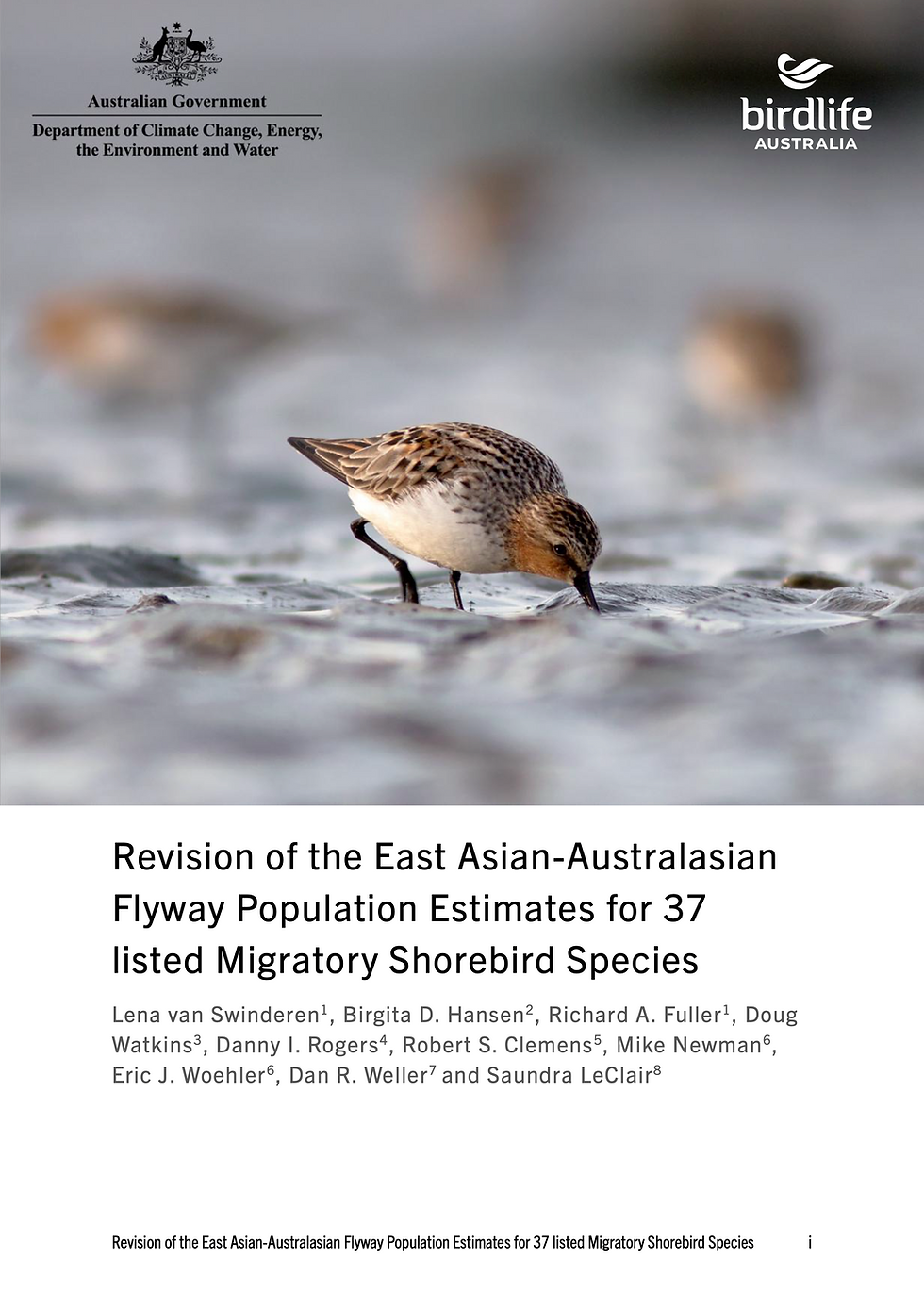
The Directory’s assessment of sites’ importance uses the latest population size estimates for the Flyway’s migratory shorebird species – presented in this report linked on the DCCEEW website.
Using the Directory: a tool for birders
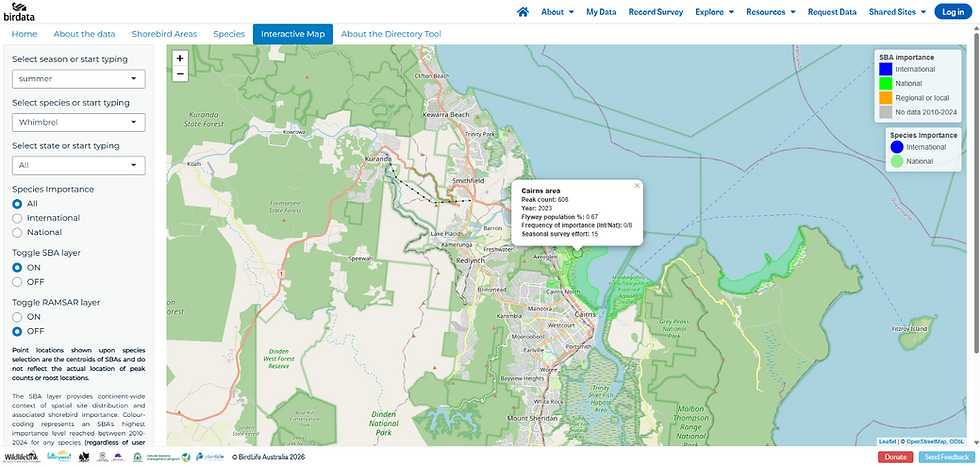
One of the most useful features of the updated Directory is its interactive online platform, available via BirdLife Australia’s Birdata portal. This tool allows users to:
Explore Shorebird Areas (SBAs) on a map
Filter by Shorebird Area, State, species, season, or significance level
View peak counts and historical data
Download summary data for use in conservation assessments, management, and advocacy
What the Directory doesn’t tell us (yet)
While the Directory is comprehensive, it’s not complete. There are still important limitations:
Gaps in survey effort, especially in remote northern and inland areas of the continent
Some species are harder to detect or widely dispersed
International data gaps (e.g. parts of Southeast Asia) affect population estimates
This means some important sites may not yet be recognised, and highlights the need for ongoing and enhanced monitoring.
A testament to volunteer effort
The Directory exists because of volunteers. Decades of fieldwork – often early mornings on mudflats, estuaries, and wetlands – have built the dataset that underpins this national assessment. Every count contributes to better population estimates, stronger conservation decisions, and greater protection for shorebirds. Cairns’ recognition as a significant site is, in large part, a reflection of the dedication of local observers.
Looking ahead
The Directory will continue to evolve. Future work includes filling survey gaps across northern Australia, refining population estimates, and improving mapping of shorebird habitats. For Cairns, this means its importance may become even clearer over time.
What can you do?
The Directory is not just a scientific resource – it’s a call to action. Here’s how you can get involved:
Use the Directory tool: Explore the online Directory and familiarise yourself with the Cairns SBA and its nationally important species.
Keep counting: Join or support local shorebird surveys coordinated through BirdLife Northern Queensland’s Threatened Coastal Birds program. Continued coordinated, standardised monitoring is essential.
Advocate for protection: Use Directory data to support conservation discussions, planning processes, and community awareness.
Share knowledge: Help others understand the significance of Cairns’ shorebird habitats.
The Directory confirms that Cairns is not simply a good place to see shorebirds – it is one of the places that helps sustain migratory shorebird populations across the East Asian-Australasian Flyway.
Further reading and contact information
Directory tool: Birdata
For volunteer opportunities please contact Paul Fisk, Threatened Coastal Birds Project Leader, BirdLife Northern Queensland at pgfisk@yahoo.com.au or on 0402 591 215.


