Hasties Swamp monthly bird survey: December 2025

Updated: Jan 21
Lesley Deacon | Guest Contributor
While coastal weather conditions were hot, humid and rainy, the Tablelands began summer with quite mild conditions. A couple of nasty storms caused some vegetation damage, but the heavy rain that came with the patchy storms was welcome after a very dry spring. Survey day (5 December 2025) was fine, but extremely windy and this caused the birds to disappear. It was a disappointing survey with only 52 species recorded.
Pacific Black Duck were the most numerous on the water. Some Grey Teal could be found among them, and there was still a large contingent of Wandering Whistling-Duck. Most of the Australasian Grebe have departed and there were few waders… or maybe they were all sheltering in thick vegetation on the lagoon bank and we just didn’t see them.
However, there were large numbers of Comb-crested Jacana at the water’s edge and we were pleased when a bold juvenile came over to investigate the area close to the hide.

A couple of difficult to identify waterbirds stalking in long grass at the swamp edge turned out to be Dusky Moorhen juveniles without their bright red shields.
We had been wondering about Pale-vented Bush-hen but doubted they would be seen in the open. Then to our surprise, the unmistakable call of the Pale-vented Bush-hen could be heard as a pair called to each other in the long matted grass, as they often do morning and evening in early breeding season. It was a great confirmation that they are still present and breeding at Hasties.
Pink flowers littered the ground as the Mellicope elleryana are in blossom again and obviously targeted by both Lorikeets and Honeyeaters. A visitor from Warrnambool, Victoria, managed a lifer photo of a Scaly-breasted Lorikeet high in the canopy. The Scarlet Honeyeaters were in abundance and neck-craning was rewarded with good views of the brightly coloured males flitting from flower to flower.

A large flock of Chestnut-breasted Mannikin were feeding in the long-stemmed grass heads. The flocks are usually a bit “hit and miss” at Hasties, although often seen at the road verges on the way out. There were quite a few juveniles in the flock and numbers are approximate as they fly very quickly and disappear into the waving grass stems just as quickly.

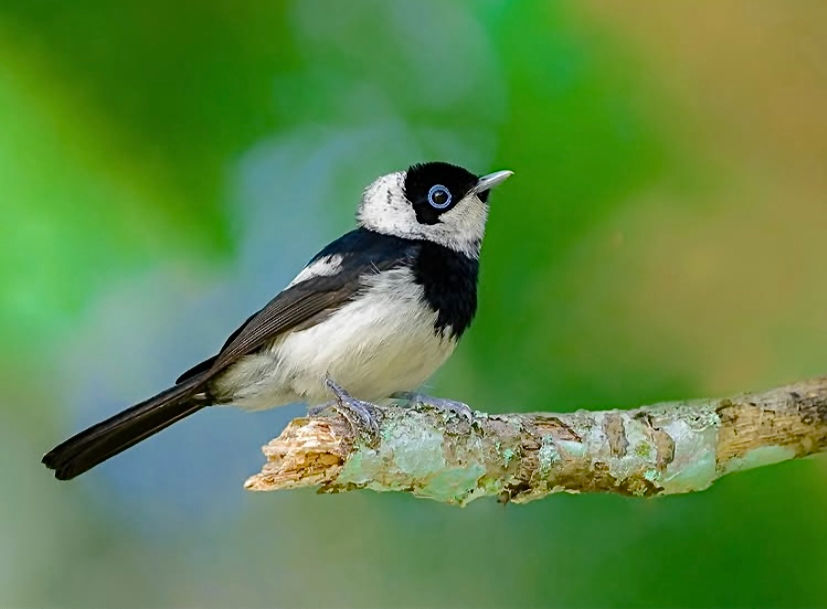
There was considerable intensive birding along the road as we tried to find our normal common birds that would elevate our total above 50 species. We eventually picked up the Golden Whistlers, the Eastern Whipbird, the Large-billed Scrubwren, some Red-browed Finch and both Monarchs, but it was hard work.

The list was completed at 9 am and despite new species then appearing (it usually happens) as we left the survey site: they were not allowed to be counted as the scientific survey time is very specific.
By far, the highlight of the morning was Birdcall and a special Christmas Morning Tea feast to celebrate our birding year on the verandah at Jennifer’s home. There was a tour of her lovely garden and even a Pacific Baza pair and nesting Sahul Sunbirds to see. Thankyou Jennifer and Jerry for your hospitality.

We shall regroup for the first Friday in 2026.