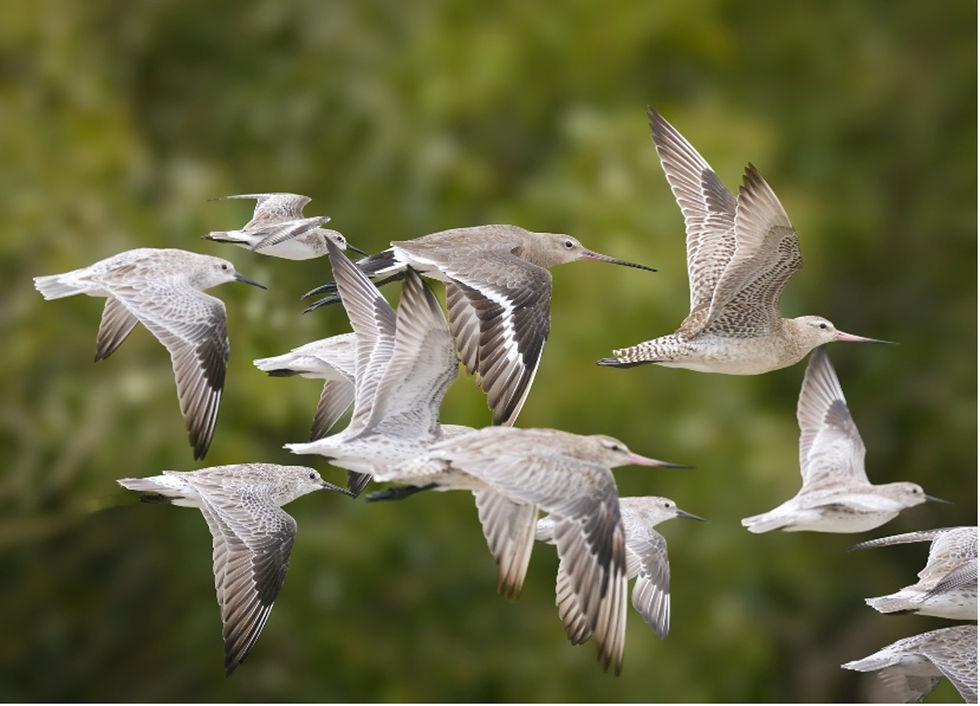
Community volunteers helping build a clearer picture of Cassowary Coast shorebirds

BirdLife Northern Queensland and Cassowary Coast Regional Council
A new community monitoring program is helping build a better understanding of shorebirds and marine turtles along the Cassowary Coast – and giving local volunteers the skills to contribute directly to their conservation.
Established by Cassowary Coast Regional Council as part of recovery efforts following Tropical Cyclone Jasper, the project is also addressing existing gaps in shorebird and marine turtle monitoring and expanding observations across a wider area of the coastline.
The aim is to develop a clearer picture of where shorebirds and marine turtles occur, where nesting is taking place, and the pressures these species are experiencing. Collecting information consistently across different sites will help reveal the bigger picture and identify issues that may require further conservation attention.

Building a community of coastal monitors
Community volunteers are integral to the program, with Council providing equipment and training to undertake monitoring at priority coastal sites.
Volunteers record observations including shorebird species and numbers, nesting activity, chicks and hatchlings, turtle tracks and other signs of nesting, as well as potential threats and disturbances.
Importantly, the emphasis is on observing and recording wildlife without disturbing animals, nests or hatchlings. Volunteers undertake monitoring and observation only and are not responsible for wildlife rescue or handling.
Recent training workshops have helped participants develop the skills needed to identify species and signs of nesting activity, recognise potential threats and collect observations consistently and accurately.
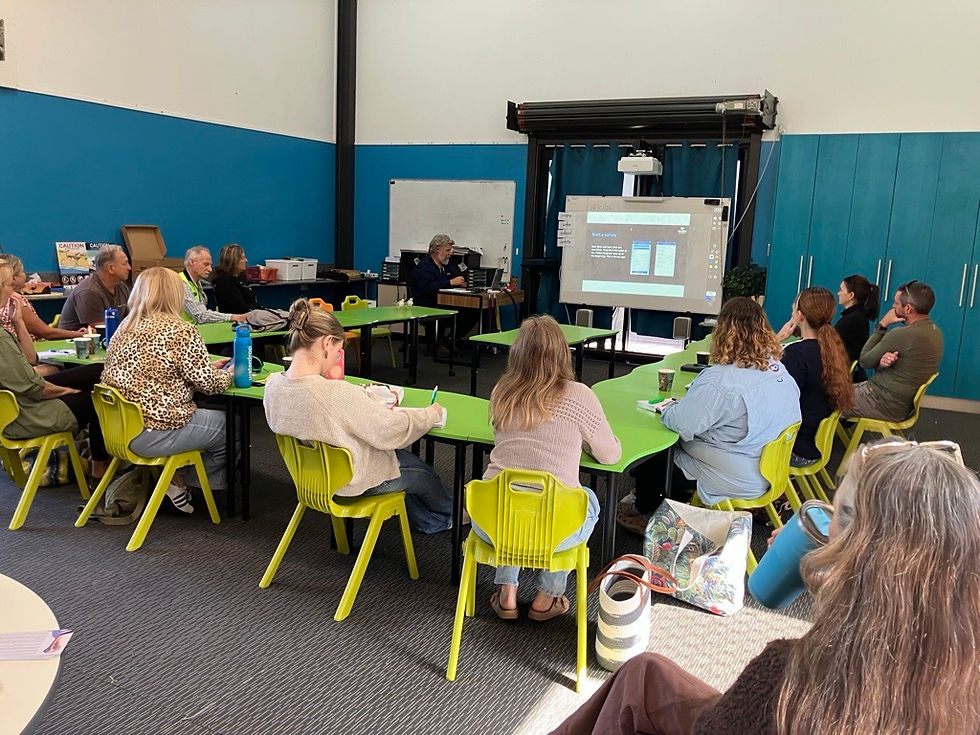
BirdLife Northern Queensland members Ceri Pearce and Sandra attended the most recent shorebird monitoring workshop in Tully on 19 August and came away inspired to put their new skills into practice.
As Ceri commented afterwards, waders have always been among the more challenging birds for her to identify, but the workshop left both participants keen to get out on the coast, contribute to Council’s shorebird surveys and add their observations to BirdLife Australia’s Birdata platform.
The workshop combined classroom learning with practical activities and time in the field, giving participants an opportunity to build their identification and monitoring skills before considering how those skills can be applied at coastal sites.
BirdLife expertise also formed part of the day, with participants hearing about shorebird monitoring and fledgling records from northern Queensland in recent years.

Giving nesting birds space
Monitoring is only one part of protecting shorebirds. Reducing disturbance at nesting sites is particularly important for beach-nesting birds, whose eggs and chicks can be extremely vulnerable to people, dogs and vehicles.
Council and BirdLife are encouraging beach users to take notice of signed nesting areas and give birds the space they need. Seasonal signage asks people to keep pets and vehicles out of designated nesting areas and observe birds from a distance – simple actions that can make a real difference during the breeding season.

From observations to conservation
The value of the monitoring program extends well beyond individual surveys.
Information collected by volunteers is submitted to Council and will also be provided to the Queensland Government and other relevant agencies and stakeholders. Over time, consistently collected observations from across the Cassowary Coast can help build the evidence needed to better understand these species, identify emerging pressures and inform future conservation and management.

It is also a great example of the contribution citizen science can make across large and dynamic coastal environments. Individual observations may seem small, but when trained volunteers collect comparable information across many locations and over time, those observations can collectively reveal patterns that would otherwise be difficult to detect.
For BirdLife Northern Queensland, it is particularly encouraging to see more people developing the confidence and skills to identify and monitor shorebirds – and contributing observations that can ultimately help protect them.
Anyone interested in learning more about the Cassowary Coast shorebird and marine turtle monitoring project, or getting involved in the monitoring program, can contact the project team at shorebirdseaturtle@ccrc.qld.gov.au.