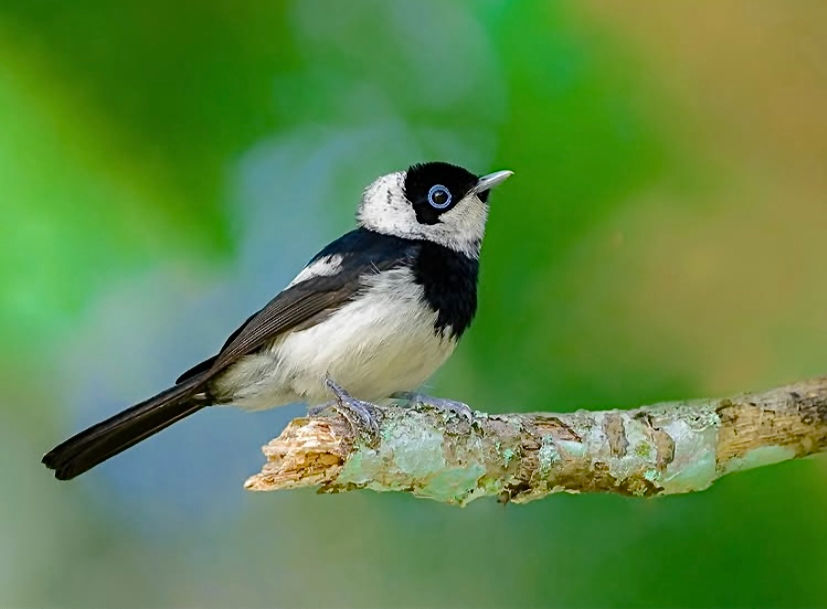
Hasties Swamp monthly bird survey: April 2026

Peter Valentine | Conservation Officer
As I drove from Malanda to Hasties in the pouring rain at 6:00 am, I was thinking I could be on my own for this month’s Hasties Swamp National Park bird survey. Luckily the family of Eastern Long-eared Bats that often occupy my rain jacket, hanging on a peg under our front patio, had gone elsewhere so I was able to take the jacket with me. Very helpful. It was wonderful to see eight regulars turn up despite the conditions.

The Tablelands were well-represented with most of the former railway stations represented – Al Sweet from Atherton, Helen Slater from Tolga, Louise Baume from Mareeba, Alan Gillanders from Yungaburra, Jen Browne from Kureen, Leonard Arnold from Jaggan (or Tarzali), Drew Haffenden from Millaa Millaa, and Peter Valentine from Malanda. The sad news is that most of these places are now connected by potholed roads rather than rail or even bikeways. But, moving on ....
As there was virtually nothing on the water, our counting tasks were not so onerous with many species restricted to one or two individuals. Having said that, we did gradually add to the numbers and the diversity. After 30 minutes in the hide (out of the rain and with quite a bit of social chatting) we appealed to Jen for a reduced quota to reach our Amaretto biscuit target. Perhaps 20 species instead of 40?
While in the hide we did begin to see a few additions including several Australian Swiftlets. One Pacific Swift up high and a solitary Needletail were also reported. Australian Grebe (5), Dusky Moorhen (1), Eurasian Coot (2), Little Black Cormorant (2), Wandering Whistling-duck (2), Pacific Black Duck (9), and a single Hardhead made up our waterbird list, plus 11 Australasian Swamphen.
As we left the hide we felt a little more confident that morning tea might include an Amaretto biscuit, especially with a target of 20 species. Despite the ongoing drizzle/mizzle the bush birds were calling and showing reasonably well. Our three sharp-eared birders, Jen, Louise and Helen, helped a lot with calls being picked up and enabling views of some excellent birds.
In the trees near the hide Louise spotted two Green Ring-tail Possums curled up next to each other, and we all enjoyed the sight and sympathised with their wet appearance.

Unfortunately the Barking Owls, which have been regular, had found another perch today. A pair of Eastern Whipbirds was calling loudly around the bird hide and we enjoyed the many calls despite not being able to see them. Brown Gerygones were also calling and as is usually the case, as we walked south along Koci Road, we encountered a few more bush birds to add to the tally.
The ever-present Eastern Yellow Robins warmed us up with their bright yellow breast colour, and Lewin’s Honeyeater, Dusky Honeyeater, and MacLeay’s Honeyeater all showed well.


The Rufous Shrike-thrush was calling well and showing.

We noted two Red-backed Fairywrens, and overhead we had Rainbow Lorikeets and later, Scaly-breasted Lorikeets, giving us a classical and rowdy flyby. But even louder were the two Sulphur-crested Cockatoos as they flew above us: but wait, there were more, another 10, then more again, and in the end 32 squawking Cockatoos seemed to be objecting to our very presence.
As we reached the northern end we suddenly had some very exciting birds. A beautiful Grey Goshawk was perched in a tree across the swamp.

Then Alan and Jen spotted a Fruit-dove and we got reasonable views of a male Superb Fruit-dove. According to my own records I have only seen one once before at Hasties, in 2022.

A Forest Kingfisher was spotted across the water and Louise took a photo that revealed there were two. We were then intrigued by a bird sitting high up on a dead tree branch, which I thought looked like a honeyeater, maybe a Lewin’s. Eventually some cropped images revealed it and another near it: two Bridled Honeyeaters.
A bunch of smaller honeyeaters near these flew across towards us and revealed that they were White-throated. A Yellow-faced Honeyeater also showed and a pair of Golden Whistlers were seen and heard. Three Large-billed Scrubwrens chased each other, and on the side of the road a beautiful Rufous Fantail spread its tail.
The Black-faced Monarch was seen on several occasions along with a Spectacled Monarch, and a couple of Red-browed Finches flew across our path. Calls of Silvereyes were heard by Drew and later seen. With addition of a Magpie-lark we became confident we might make 40 species after all!

As we walked back to the hide we noted six Pied Currawongs flying ahead of us, and three Australasian Figbirds showed themselves. Bar-shouldered Doves perched on the powerlines started as two, became four then nine, along with a pair of Peaceful Doves. By the time we got back to the hide for a last look we had seen three Willie Wagtails and five Brown Cuckoo-doves.
With our final check in the hide we suddenly noticed four Magpie Geese fly in and then four Plumed Whistling Ducks. But also, along the edge, five Rainbow Bee-eaters were hunting insects in the air. Louise called out, “There is the Azure Kingfisher”, and sure enough it was perched on a thin branch of a Bleeding Heart tree (one of its favourite hunting perches). But this time it was sharing the perch with a Rainbow Bee-eater. What a sight. Luckily Louise captured the image – the shot of the day?

Another Rufous Shrike-thrush came in and more significantly, an Olive-backed Oriole (that we had heard calling) landed on a tree next to the hide and began to search for food. It was a young bird that gave us excellent views.

We called it a day (the two hours were up) and as we enjoyed our cuppa and Amaretto biscuits (thanks to Jen), the bird call revealed 49 species and 190 individuals. This was a much better day than I had expected given the weather! But it had stopped raining by the end so conditions were mostly comfortable. Thanks especially to Leonard and Louise for photos.
Everyone is welcome to join us on the first Friday of the month.