

Showcasing Birds With Altitude at Queensland Ornithological Conference 2026

Updated: Aug 7
Renée Cassels | Secretary
Queensland’s leading bird researchers, conservation practitioners, and citizen scientists gathered at Sirromet Winery on 25 July for the 2026 Queensland Ornithological Conference (#QOC2026), united under the theme:
Wings of Tomorrow: Protecting our shared future.
Co-hosted every two years by Birds Queensland and BirdLife Southern Queensland, the conference has become one of Australia’s premier forums for sharing new research, conservation successes, and practical solutions for protecting our avifauna.
For BirdLife Northern Queensland (BLNQ), the conference provided an opportunity to showcase one of the branch’s most ambitious initiatives yet – Birds With Altitude, our long-term citizen science program monitoring how climate change is reshaping bird communities across Queensland’s Wet Tropics.
I was honoured to present the project on behalf of Birds With Altitude Project Leader Ceri Pearce, introducing delegates to a growing volunteer-powered monitoring network that is helping build the long-term datasets needed to understand ecological change in one of Australia’s most climate-sensitive landscapes.


Monitoring change in a changing climate
The Wet Tropics is one of the world’s great biodiversity hotspots, supporting unique bird communities found nowhere else on Earth. Many of these rainforest species occupy cool mountain environments and are expected to be among Australia’s most vulnerable birds as the climate continues to warm.
The presentation explored why long-term monitoring has become one of conservation’s greatest challenges.
Previous work led by Professor Steve Williams and colleagues demonstrated that rainforest bird communities are already changing in ways predicted more than two decades ago. The challenge now is continuing that monitoring over coming decades—a difficult task as funding cycles end, research priorities shift, and long-running projects inevitably conclude.
Birds With Altitude was created to help address that challenge.
Rather than replacing professional research, the project builds on it by combining scientifically rigorous survey methods with the passion and continuity of a highly trained volunteer network. Using BirdLife Australia’s nationally recognised monitoring protocols and Birdata, volunteers collect standardised information that contributes to a secure, long-term scientific record of ecological change.
Today the project spans all five Wet Tropics Key Biodiversity Areas, with more than 60 monitoring locations and over 1,200 standardised bird surveys completed.
Ultimately, the project isn’t simply about counting birds. It is about generating the evidence needed to guide conservation action, identify climate refugia, improve habitat connectivity, and help species adapt to a changing climate.

An encouraging response
One of the highlights of the conference was the overwhelmingly positive response to the presentation.
Following the event, Ceri and I received an email from BirdLife Australia with generous feedback on both the presentation and the Birds With Altitude initiative. It was encouraging recognition – not only of the presentation itself, but of the enormous effort contributed by the volunteers, coordinators, partners, and supporters who have helped Birds With Altitude grow from a single pilot site into a region-wide monitoring program.
Another unexpected highlight came when Professor Hugh Possingham featured a photograph of the presentation in his conference social media post, describing the day as one of “fabulous talks about successful bird conservation” and noting that “bird conservation is booming.”
A conference full of ideas
QOC2026 demonstrated the remarkable breadth of bird conservation currently underway across Australia.
From Dr Golo Maurer’s keynote on BirdLife Australia’s AVISTEP decision-support tool, through to presentations on Red Goshawk recovery, Indigenous wetland restoration, cassowary conservation, seabird management, artificial intelligence, environmental DNA, woodland bird monitoring, and BirdLife Australia’s national advocacy campaigns, the day highlighted both the challenges facing Australia’s birds and the innovation emerging to address them.


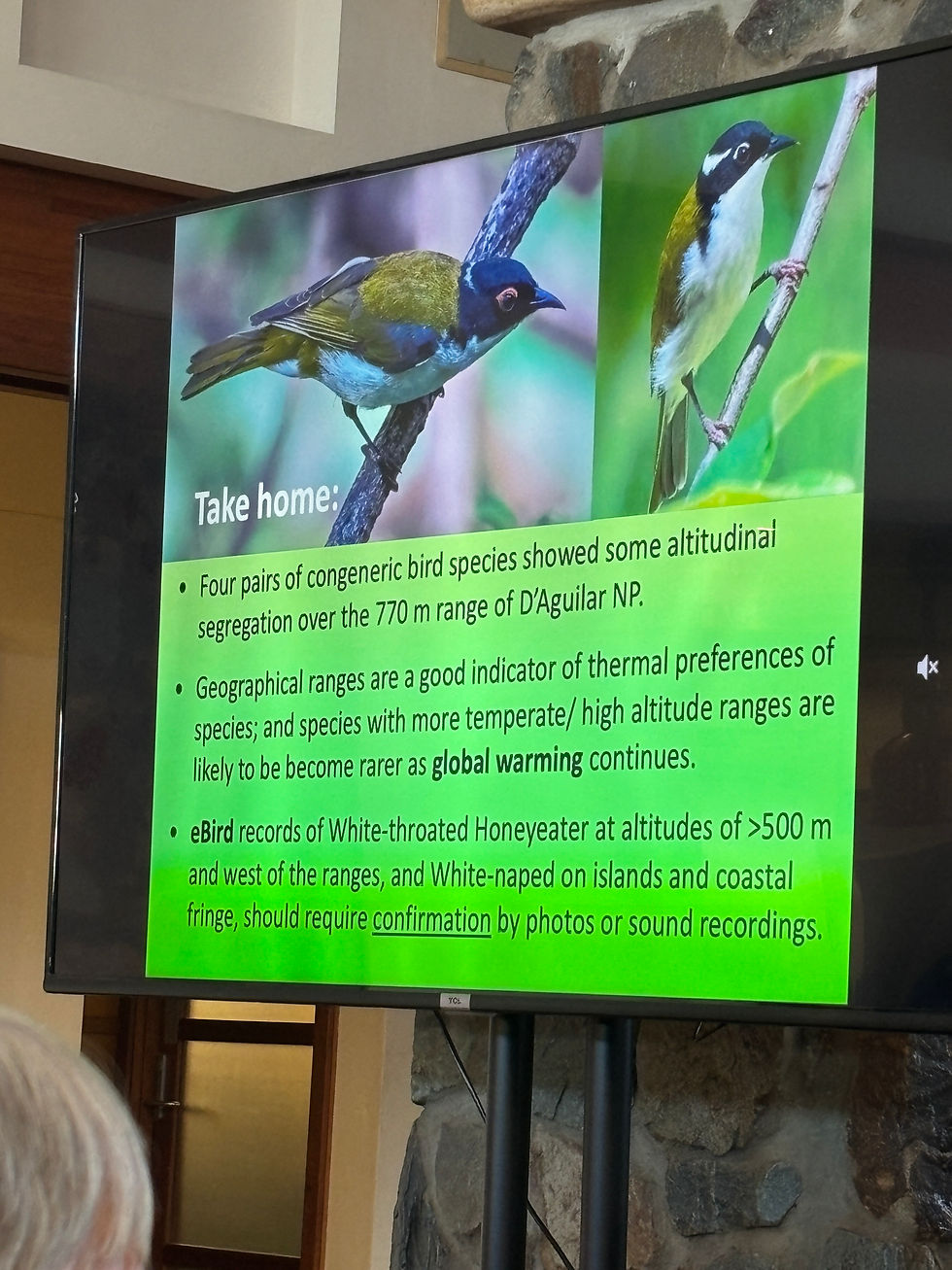

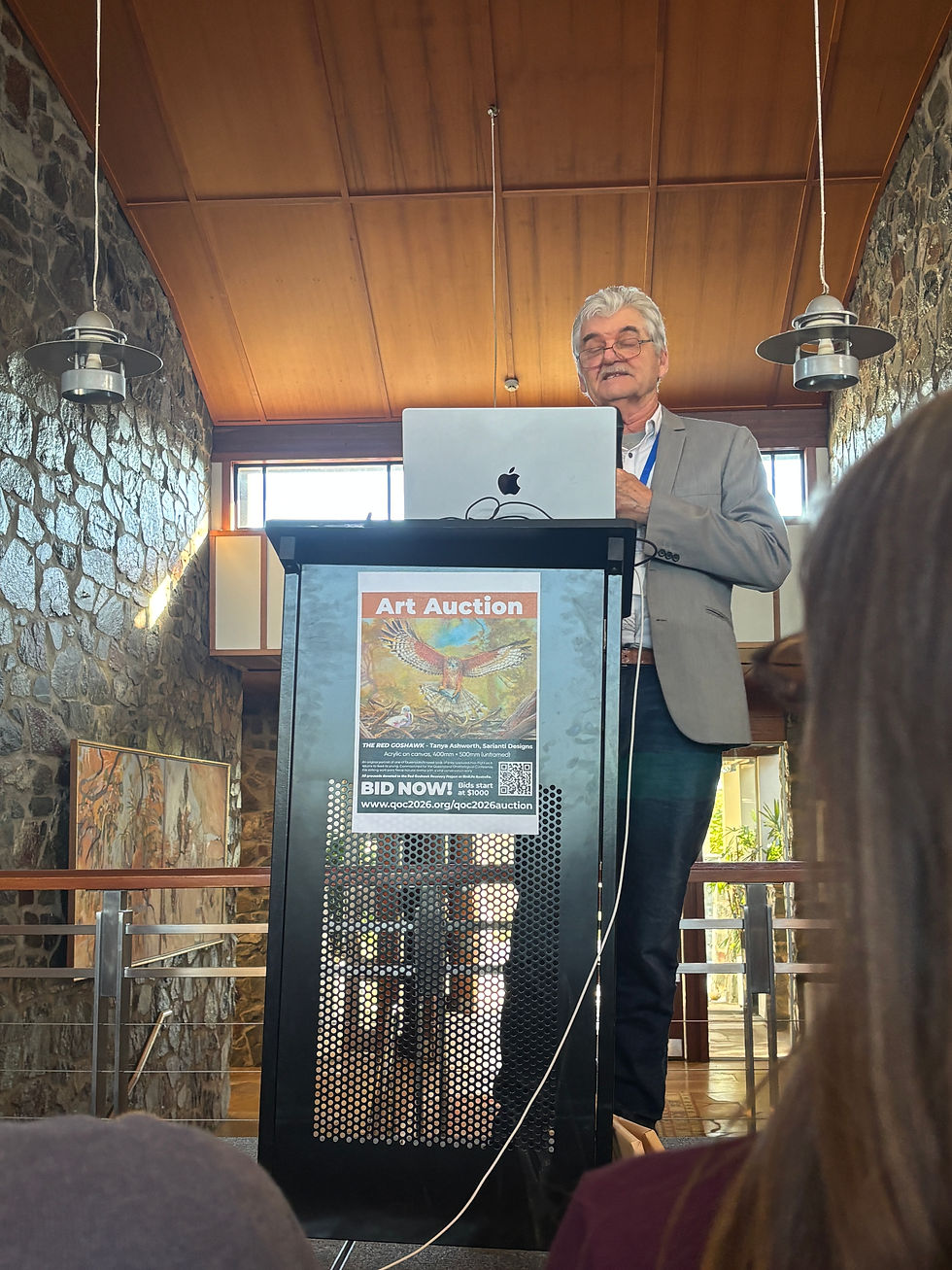

A consistent message emerged throughout the conference: effective conservation depends on understanding how ecosystems are changing. Whether the focus was threatened species recovery, habitat restoration, renewable energy planning, or landscape management, the most successful programs were those underpinned by robust, long-term evidence.
Monitoring wasn’t presented as an end in itself – it was the foundation for prioritising actions, evaluating what works, adapting management over time, and ultimately improving conservation outcomes.
Looking ahead
Although Birds With Altitude is only five years old, the project has already expanded across the Wet Tropics, established partnerships with government, universities, and BirdLife Australia, received recognition from the Wet Tropics Management Authority, and continues to evolve as new monitoring techniques become available.
Perhaps most importantly, it demonstrates what passionate volunteers can achieve when they work together towards a common scientific goal.
As climate change accelerates, the need for reliable long-term ecological data will only increase. By building a sustained, volunteer-powered monitoring network today, BirdLife Northern Queensland is helping ensure future conservation decisions are informed by robust evidence collected over decades – not just years.
The enthusiastic reception at QOC2026 reinforces that this approach has an important role to play in Australia’s conservation future.
Download the presentation
Interested in learning more about Birds With Altitude and our long-term monitoring program?
Download the presentation delivered at the Queensland Ornithological Conference 2026 to explore the science behind the project, our monitoring methods, recent milestones, and our vision for understanding how climate change is reshaping bird communities across the Wet Tropics.


